It is difficult to be a young man in this world. The Word of God addresses young men in some very specific ways:
Indeed, it is difficult to be a young man in our world. I’m so grateful that the Word of God addresses our need. As such, it does not leave young men dangling. Rather, it addresses them directly.
This chapter focuses on the anatomy of God-centered resolutions. In ordered to understand this important topic, we must wrestle with the dilemma and the determination.
THE DILEMMA (Psalm 119:9)
… for the intention of man’s heart is evil from his youth. Neither will I ever again strike down every living creature as I have done. (Gen. 8:21)
Even youths shall faint and be weary, and young men shall fall exhausted. (Isa. 40:30)
So flee youthful passions and pursue righteousness, faith, love, and peace, along with those who call on the Lord from a pure heart. (2 Tim. 2:22)
Flee from sexual immorality. Every other sin a person commits is outside the body, but the sexually immoral person sins against his own body. Or do you not know that your body is a temple of the Holy Spirit within you, whom you have from God? You are not your own, for you were bought with a price. So glorify God in your body. (1 Cor. 6:18–20)
A Key Question
How can a young man keep his way pure? By guarding it according to your word. (Ps. 119:9).
There are at least seven reasons why the psalmist sets his sights on young men (a Hebrew term that points to “a man in his days of adolescence.”
First, young men are vulnerable. Research reveals that one in seven young men aged 16 – 24 experience depression or anxiety each year. The simple fact is that young men are at risk in our world – personally, emotionally, sexually, and spiritually.
Second, young men struggle with discipline. Is it any wonder that the apostle Paul addressed the matter of discipline with the young man, Timothy: “But have nothing to do with worldly fables fit only for old women. On the other hand, discipline yourself for the purpose of godliness” (1 Tim. 4:7, NASB95). Many challenges that young men face stem from a lack of proper discipline.
Third, young men struggle with direction. Ask a young man sometime, “Where you do see yourself in ten years? In most cases, you will be met with blank stares and groans. If you are a young man reading this and have an idea of your future path, good for you. Keep growing in grace. Keep trusting the Lord. Commit your way to him God and bank on his sovereign purposes for your life. But know this, many young men struggle with direction.
Fourth, young men struggle with authority. Whether it is presidents, principals, police officers, or pastors – young men tend to struggle with authority. Why? Because they along with the rest of us have inherited Adam’s sin nature:
“Therefore, just as sin came into the world through one man, and death through sin, and so death spread to all men because all sinned—” (Romans 5:12)
The heart is deceitful above all things, and desperately sick; who can understand it? (Jer. 17:9)
There is no other way to state the obvious: Young men struggle with submitting to authority structures in their lives.
Fifth, young men struggle with worldliness. C.J. Mahaney’s words ring true for all people, but hit closest to home with young men:
Worldliness, then, is a love for this fallen world. It’s loving the values and pursuits of the world that stand opposed to God … It is to gratify and exalt oneself to the exclusion of God. It rejects God’s rule and replaces it with our own. It exalts our opinions above God’s truth. It elevates our sinful desires for the things of this fallen world above God’s commands and promises.
So the psalmist’s question is of utmost importance:
How can a young man keep his way pure? (Ps. 119:9a)
Way refers to our “course of conduct” or the general pattern of our lives. The psalmist highlights the importance of this term in the first chapter of Psalms:
Blessed is the man who walks not in the counsel of the wicked, nor stands in the way of sinners, nor sits in the seat of scoffers; but his delight is in the law of the LORD, and on his law he meditates day and night. He is like a tree planted by streams of water that yields its fruit in its season, and its leaf does not wither. In all that he does, he prospers. The wicked are not so, but are like chaff that the wind drives away. Therefore the wicked will not stand in the judgment, nor sinners in the congregation of the righteous; for the LORD knows the way of the righteous, but the way of the wicked will perish. (Ps. 1:1–6)
Pure means “to keep free from immorality or sin.” The Bible is clear about steering clear from worldliness. The apostle John writes, “Do not love the world or the things in the world. If anyone loves the world, the love of the Father is not in him” (1 John 2:15).
The world (kósmos) is that system which is diametrically opposed to God, his Word, and his kingdom:
You adulterous people! Do you not know that friendship with the world is enmity with God? Therefore whoever wishes to be a friend of the world makes himself an enemy of God. (Jas. 4:4)
The kósmos is that system that is perverted to the core:
Do all things without grumbling or disputing, that you may be blameless and innocent, children of God without blemish in the midst of a crooked and twisted generation, among whom you shine as lights in the world, (Phil. 2:14–15)
The kósmos is that system that is evil and opposed to Christ:
The world cannot hate you, but it hates me because I testify about it that its works are evil. (John 7:7)
The kósmos is that system that aggressively promotes godlessness:
See to it that no one takes you captive by philosophy and empty deceit, according to human tradition, according to the elemental spirits of the world, and not according to Christ. (Col. 2:8)
The kósmos is that system that is fleeting and fatal:
but the cares of the world and the deceitfulness of riches and the desires for other things enter in and choke the word, and it proves unfruitful. (Mark 4:19)
Mark the word sumpnigō, translated as “choke” in Mark 4:19. It means “to obstruct one’s throat and to deprive a person of air.” That’s exactly what the worldly system does to unsuspecting young men.
Sixth, young men struggle with developing robust theological convictions. Why is it so difficult to develop theological conviction in a postmodern world? Because the zeitgeist (the spirit of the age) is either whispering in young men’s ears or shouting in their faces. The zeitgeist whispers, “No one believes the Bible anymore. Rational people don’t believe in talking snakes or a suffering Messiah.” But the zeitgeist also shouts, “Only fools believe the Bible.” I have interacted personally with young pastors who only give lip-service to the Bible. When it comes to submitting to the authority of God’s Word, these progressive-minded pastors fall short.
Seventh, young men struggle with pride. In his classic work, Thoughts for Young Men, a book that every man needs to read with their sons, J.C. Ryle remarks, “Pride sits sin all our hearts by nature. We are born proud. Pride makes us rest content with ourselves – think we are good enough as we are – keep us from taking advice – refuse the gospel of Christ – turn everyone to his own way. But pride never reigns anywhere so powerfully as in the heart of a young man.”
Why does the psalmist focus his attention on young men? Because they are vulnerable. They struggle with discipline and direction. They struggle submitting to authority. They battle with worldliness. They have difficulty formulating robust theological convictions. And they struggle mightily with pride.
Now if you’re reading this as a young woman, an older man, or an older woman, you’re feeling pretty good right now! But here is the hard reality. These are all struggles that people experience in a fallen world. I believe the psalmist sets his sights on young men because their struggle is so pronounced. For example, what comes into your mind when you think about a hungry newborn baby? A normal baby will cry when he or she goes for a period of time without food. Have you ever gone for an extended period of time without food? Have you discovered that excessive hunger leads to grumpiness or irritability? Here’s the point:
We all struggle with hunger. In a similar way, each of us wrestle with things unique to young men.
Ever since Adam plunged the human race on the path of sin, it has been difficult to be a young man in this world. If it is difficult to be a young man in a sin-stained world, it follows that it is a battle to be a follower of Christ in any generation.
A Pointed Answer
“How can a young man keep his way pure? By guarding it according to your word.” (Psalm 119:9, ESV)
Guarding is an important term that means “to keep in a certain state or activity.” The word, of course, refers to Scripture. Therefore, the psalmist is arguing that we need to guard our way according to the Word of God.
The Bible is our highest authority. “When God communicates information,” writes John Frame, “we are obligated to believe it. When he tells us to do something, we are obligated to obey.” Tragically, many professing Christians maintain their “so-called” right to pick and choose what they believe and obey. But the Bible establishes the guidelines and ground rules for living: “And now, Israel, what does the LORD your God require of you, but to fear the LORD your God, to walk in all his ways, to love him, to serve the LORD your God with all your heart and with all your soul, and to keep the commandments and statutes of the LORD, which I am commanding you today for your good?” (Deut. 10:12–13).
The Bible provides the side boards for our lives:
- The Bible tells us how to respond to temptation.
- The Bible gives us a framework for marriage.
- The Bible establishes a pattern for authority and submission.
- The Bible reveals God’s will for our lives.
- The Bible tells us about life, death, and everything in between.
- The Bible instructs us how to battle sin.
- The Bible tells us how to live a holy life.
- The Bible shows us there is only one way to be in right relationship with God – through his Son, the Lord Jesus Christ.
Since God’s Word is our highest authority, we are obligated to obey the Bible. John Frame reminds us, “When God speaks, our role is to believe, obey, delight, repent, mourn – whatever he wants us to do. Our response should be without reservation, from the heart.” Can you hear the rebellious responses from progressive pastors and Christians? Can you hear the excuses that add up among the compromised?
Are you guarding your way by the Word of God as the psalmist counsels? Or have you fallen victim to the spirit of the age? Is your life governed by the Word of God or are you following the marching orders of the worldly system?
We have wrestled with the dilemma in verse 9. Look next at the determination in verses 10-16.
THE DETERMINATION (Psalm 119:10-16)
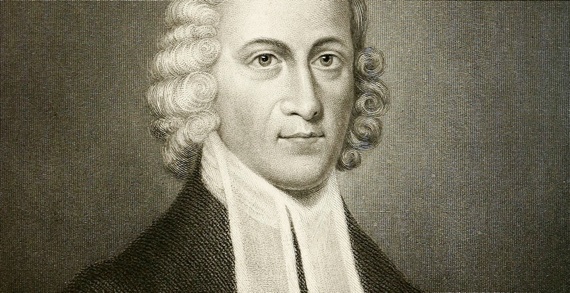
When Jonathan Edwards was a newly converted Christian in his late teens, he penned seventy resolutions, that helped establish a God-centered focus in his Christian pilgrimage. In verses 10-16, the psalmist proceeds to show how the Word of God will govern his life.
The Formation of God-Centered Resolutions
Godly Pursuits
With my whole heart I seek you; let me not wander from your commandments! (Psalm 119:10)
The Hebrew term translated seek means “to pursue something a person desires.” Notice that the psalmist is all in. “With my whole heart I seek you.” Every fiber of his being (thoughts, will, mind, and knowledge) is consumed with God. His urgent desire is that he would never wander from God’s commands. His heart’s desire is to be governed by the Word of God.
Godly Discipline
I have stored up your word in my heart, that I might not sin against you. (Ps. 119:11)
The apostle Paul echoed the sentiment of the psalmist in his letter to the young pastor, Timothy: “But have nothing to do with worldly fables fit only for old women. On the other hand, discipline yourself for the purpose of godliness.” (1 Timothy 4:7, NASB95). A critical lesson to learn for every follower of Christ is this: There is no godliness apart from discipline.
There are two motivations for a disciplined Christ-follower in Psalm 119:11. First, treasure. The word store could be translated as “treasured.” It means to be regraded as “highly valued.”
The second word is triumph. The psalmist writes, “I have treasured your word in my heart, that I might not sin against you.” I would consider THAT a triumph; a mighty victory as the psalmist makes discipline a regular part of his Christian journey. Brian Borgman adds, “To keep our life pure according to God’s Word, we must seek God in his Word and store his Word up in our hearts. The Word is ammunition; providing threats and promises to keep us from sinning. The Word shapes our minds and our life. It is the great antidote to sinning against God.”
How can we be disciplined?
- We discipline ourselves to read the Word of God.
- We discipline ourselves to meditate on the Word of God.
- We discipline ourselves to memorize the Word of God.
Godly discipline, then, is a critical resolution in the life of a God-follower.
Godly Learning
Blessed are you, O LORD; teach me your statutes! (Ps. 119:12)
The cry of the psalmist’s heart is for God to teach him his statutes. Teach means “to impart skills or knowledge.” Please understand that downplaying or demeaning knowledge in the Christian life is not only foolish; it is antithetical to Scripture. A disciple of Jesus Christ is a learner by definition.
- Do you consider yourself a lifelong learner?
- Do you have a passion to learn everything you can about God and his Word?
- Do you delight in opening the Bible and learn about God’s law?
Godly Declaration
With my lips I declare all the rules of your mouth. (Psalm 119:13)
The psalmist makes this resolution:
- I will tell the truth, no matter the cost.
- I will tell the nations about Jesus.
- I will declare the truth of God’s Word!
Godly Affections
In the way of your testimonies I delight as much as in all riches. (Ps. 119:14)
The Hebrew word translated as delight means “to take a high degree of pleasure in something,” in this case, pleasure in the Word of God. Is the Word of God your highest treasure?
Godly Contemplation
I will meditate on your precepts and fix my eyes on your ways. (Ps. 119:15)
The psalmist’s contemplation is fixed squarely on the Word of God. Nothing can deter him. Nothing can move his gaze from the beauty of God’s Word. Jonathan Edwards understood the necessity and the power of godly contemplation:
Resolution 28: Resolved, to study the Scriptures so steadily, constantly, and frequently that I may find, and plainly perceive myself to grow in the knowledge of them.
Godly Trajectory
I will delight in your statutes; I will not forget your word. (Ps. 119:16)
Once again, the psalmist rehearses his love for the Word of God as he delights in God’s statutes. But notice the godly trajectory that he hammers into the foundation of his life. He purposes to never forget God’s Word. Scripture is etched into his memory and embedded into his heart.
Adrian Rogers led the Southern Baptist Convention to reaffirm without apology the infallibility, inerrancy, and sufficiency of God’s Word. An attorney who represented a liberal group in the SBC told Rogers, “If you don’t compromise, we’ll never get together.” Pastor Roger’s reply is inspiring: “I’m willing to compromise about many things, but not the Word of God. So far as getting together is concerned, we don’t have to get together. The Southern Baptist Convention, as it is, does not have to survive. I don’t have to be the pastor of Bellevue Baptist Church. I don’t have to be loved; I don’t even have to live. But I will not compromise the Word of God.”
Soul-Food For Weary Saints
We have uncovered the dilemma: How can a young man keep his way pure? By guarding it according to your word. We have also discovered the psalmists determination in a world that is hostile to historic Christianity. His determination involves the formation of God-centered resolutions that will hold strong in times of trouble. What is your determination? What are your God-centered resolutions?
Our hearts are never neutral. We are always worshiping. We are either worshipping the Lord Jesus Christ or we are worshipping lesser things. Jonathan Edwards says, “But the saints (and angels) do behold the glory of God consisting in the beauty of his holiness; and ’tis this sight only, that will melt and humble the hearts of men, and wean them from the world, and draw them to God, and effectually change them.”
- C. J. Mahaney, ed.Worldliness: Resisting the Seduction of a Fallen World (Wheaton: Crossway Books, 2008), 27. ↩
- J. C. Ryle, Thoughts for Young Men (Cedar Lake: Waymark Books, 2018), 22. ↩
- John M. Frame, The Doctrine of the Word of God (Phillipsburg: P&R Publishing, 2010), 5. ↩
- Frame, The Doctrine of the Word of God, 4. ↩
- Borgman, An Exile’s Guide to Walking with God, 46. ↩
- Stephen J. Nichols, ed. Jonathan Edwards’ Resolutions and Advice to Young Converts (Phillipsburg: P&R Publishing, 2001), 20. ↩
- Cited in Daniel L. Akin, Christ-Centered Exposition: Exalting Jesus in Psalm 119 (Nashville: B&H Publishing Group, 2021), 10-11. ↩
- The Works of Jonathan Edwards, vol. 2, Religious Affections, ed. John E. Smith (New Haven: Yale University Press, 1959), 264. ↩




 Veritas et Lux