Did God Kill Jesus? – Tony Jones (2015)

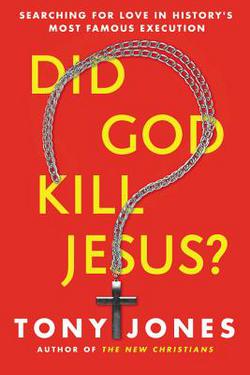
It takes 234 pages for Tony Jones to answer the central question in hisjones new book, Did God Kill Jesus?  The author is a self-described “theological provocateur,” so the question posed in his book should not surprise anyone.  The answer that emerges on page 234 is crystal clear: “No, God did not kill Jesus,” says Dr. Jones.  Readers will find that the path to this answer is paved with doubt and skepticism.  Frankly, it is a path fraught with theological compromise.

Tony Jones has a knack for asking questions.  He has an uncanny ability to question the theological status quo and forcing readers to decide, even re-evaluate their cherished views.  Unfortunately, some of the answers that Jones provides do not match the biblical record or pass the test of orthodoxy.

The author sets out to examine the various views of the atonement which have been offered up throughout church history.  The questions he fires at these theories are fair enough:

  • What does the model say about God?
  • What does it say about Jesus?
  • What does the model say about the relationship between God and Jesus?
  • How does it make sense of violence?
  • What does it mean for us spiritually?
  • Where’s the love?

Ultimately, none of the theories fully satisfy the author.  But the one he finds the most repugnant is penal substitutionary atonement.  Jones argues that this view, which he labels the payment model is currently in vogue “largely because it appeals to our sense of justice and our understanding of law and penalties.”  And he is not particularly bashful about how he feels about penal substitutionary atonement.  In his previous book, A Better Atonement: Beyond the Depraved Doctrine of Original Sin, Jones writes, “I’m on no quest to reject the penal substitutionary theory of the atonement (PSA).  (I merely intend to dethrone it).”  However, what he fails to see is this: when penal substitutionary atonement is dethroned, the gospel of Jesus Christ is thrown into the ash heap and the hope of every person perishes.

In his explanation of penal substitutionary atonement, the author assures readers that “God is holy, and we are less-than-holy.”  This appears to be a strange starting point since all who hold to penal substitutionary atonement embrace the biblical idea of total depravity – which is quite a leap from “less-than-holy.”  However, Jones’ starting point makes perfect sense (just not biblical sense) when one discovers that he has also discarded the doctrine of original sin:

“What I’ve come to realize is that the idea of original sin is not, in fact, God Eternal Truth.  It is, instead, like so many other items of faith, historically conditioned.”

To be fair Jones’ acknowledges the existence of sin.  However, he rejects the “notion that human beings are depraved from birth.”

Jones caricatures the doctrine of penal substitutionary atonement by placing God the Father in an untenable position by “sending his perfect Son to Earth, then letting him – or making him – die as a substitute for the billions of human beings past and future who are incapable of paying off the debt incurred by their sin.  That’s the Payment model” according to Tony Jones.

The biggest disappointment in this book is the repudiation of penal substitutionary atonement, the doctrine which contains the very core of the gospel message.  As noted above, the path which leads to the ultimate question in the book is riddled with “rocks” and “weeds” and “branches” that careful readers should navigate in order to understand the position the author takes. Two of these stumbling blocks are noted below.

1. Dishonoring God

A.W. Tozer was certainly on target when he wrote, “What we think about God is the most important thing about us.”  Yet what we find here is view that has much in common with process theology.  The author writes, “… We can surmise that in Jesus, God was learning.”  He continues, “But on the cross, something else happened altogether, possibly something that even God did not expect.”  The implication here appears to be a compromise of God’s comprehensive omniscience, a troubling turn of events to be sure.

Additionally, the author promotes what he refers to as the “weakness of God.”  He adds,

“Here is the guiding idea: God has forsaken power in order to give creation freedom.  In other words, God’s primary posture in the world is that of weakness, not strength.  This is a tough pill for many Christians to swallow – we’ve been taught to claim God’s power in our lives, to pray for power, and to trust God’s power and perfect plan for our lives …”

A “tough pill” to swallow?  You bet!  Discerning readers would do well to keep that “pill” out of their mouths, especially when the testimony of Scripture points to a God who is all-together sovereign and omnipotent over everything and everyone in the cosmos.  Swallow such a “pill” will leave readers spiritually sick.

2. Destroying the Heart of the Atonement

Jones makes it clear early in the book that he along with other liberals have “grown increasingly uncomfortable with the regnant interpretation of Jesus’ death as primarily the propitiation of a wrathful God.”

Yet, when one reduces the cross to a mere display of love and refuses to acknowledge that Jesus bore the wrath of God, the gospel is utterly stripped of its saving power.  Such a move is to destroy the very heart of the atonement.

Summary

In the final analysis, the answer to the question of this book is not a simple yes or no answer.  The Scripture makes it plain that both God and man killed Jesus Christ.

“… let it be known to all of you and to all the people of Israel that by the name of Jesus Christ of Nazareth, whom you crucified, whom God raised from the dead—by him this man is standing before you well.” (Acts 4:10, ESV)

“… for truly in this city there were gathered together against your holy servant Jesus, whom you anointed, both Herod and Pontius Pilate, along with the Gentiles and the peoples of Israel, to do whatever your hand and your plan had predestined to take place.” (Acts 4:27–28, ESV)

This is a book that should upset a lot of people.  Frankly, I’m glad Jones wrote the book because it will rally conservatives around the truth of the gospel.  This book should motivate pastors and scholars to go deeper into the reality of the gospel and prompt God-centered reverence and worship as they glory in the beauty of penal substitutionary atonement.

Evangelicals need to pay careful attention to books like this that grow more and more popular.  Jones urges readers to participate in what he calls, “the smell test.”  Unfortunately, something doesn’t smell right about this book.

Admittedly, Tony Jones stands in a theological stream that is more liberal-minded.  One important distinction between Jones and many other liberals is that he actually affirms the bodily resurrection of Jesus.  For this we can be thankful.  However, since he rejects penal substitution and as a result softens (or even eliminates) the wrath that Jesus bore on the cross, the scandal of the cross is blurred and even obscured.  Indeed, as Jeffery, Ovey, and Sach have rightly written, “If we blunt the sharp edges of the cross, we dull the glittering diamond of God’s love.”

Whenever wrath is removed from the cross, something crucial is missing, which is to say, the gospel is at stake.  For this reason, the view promoted here does not pass the “smell test.”

Readers are encouraged to explore the God-honoring doctrine of penal substitutionary atonement in three powerful and provocative books which include: The Apostolic Preaching of the Cross – Leon Morris, Pierced For Our Transgressions – Steve Jeffery, Michael Ovey, Andrew Sach, and It is Well: Expositions on Substitutionary Atonement – Mark Dever and Michael Lawrence.


LUTHER AND THE CHRISTIAN LIFE – Carl R. Trueman (2015)

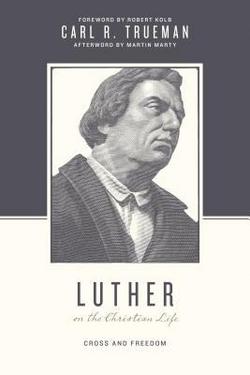
lutherMartin Luther was one of the bright shining stars of the 16th centuries who God used to restore reason to the church and recover the gospel of Jesus Christ.  Carl R. Trueman unpacks the Protestant Reformer in his latest work, Luther on the Christian Life.

The book is a balanced blend of biography, Reformation history, and theology.  Beginners and seasoned students of Luther will all benefit from Trueman’s work.

While each chapter is a worthy read, the fifth chapter, Living By the Word will be the focus of this review.  The author does a magnificent job of drawing Luther’s love for the Bible in these pages.  But he demonstrates how important the Holy Spirit was in Luther’s life and theological framework: “For Luther, the Spirit is only given with the external word.”  Indeed, the Spirit of God uses the Word of God to transform the people of God.  Eliminate the Spirit and the result is a dry rationalism.  Remove the Word and the result is a subjective train wreck.  Luther stressed the importance of both the Word and the Spirit.

Luther’s devotional life and approach to the Christian life is explored, leaving readers with much to contemplate and weight out.  The author contrasts Luther’s emphasis on being a theologian of the cross (as opposed to a theologian of glory):

The very essence of being a theologian of the cross is that one sees God’s strength as manifested in weakness.  The primary significance of that is the incarnation and the cross.  God’s means for overcoming sin and crushing death are the humiliation of his Son, hidden in human flesh.  Nevertheless, the cross also has a certain paradigmatic aspect to it, for it indicates that God does his proper work through his alien work.

Additionally, Luther’s approach to spiritual warfare is reviewed.  Anyone who battles melancholy stands in good company, for Luther battled the same throughout his adult life.  Truman adds, “Luther certainly regards the cultivation of despair as one of the primary tasks of the Devil … Everything hangs on this, from confidence before God to ethical conduct before neighbors, to the ability to look death in the face and not despair.”

Luther’s struggles are always held captive to the Word of God.  Ultimately, Luther’s relief comes when he rests in the promises of the gospel.  Luther says,

And so when I feel the terrors of death, I say: ‘Death, you have nothing on me.  For I have another death, one that kills you, my death.  And the death that kills is stronger than the death that is killed.’

Carl Trueman offers a carefully thought out treatment of Luther, which includes both triumphs and tragedies.  The reader can determine which issues merit further studies.  Luther and the Christian Life is a fine contribution to the growing work on the German Reformer.

Highly recommended!

RISK IS RIGHT – John Piper (2012)

The very notion of risk is a foreign subject to most Americans.  Yet, anapiper important aspect of the Christian life can be summed up in one word: risk.  John Piper argues that risk is essential.  The title of the book is Risk is Right: Better to Lose Your Life Than to Waste It.

Readers familiar with Dr. Piper’s Christian hedonism will gravitate to this book – for God is most glorified in us when we are most satisfied in him.  Piper writes,

This is what we live for, and die for: to make much of Jesus Christ and his glorious, universe-encompassing kingdom.  The heart cry of our lives, young and old, men and women, rich and poor, is the glory of Jesus Christ so that with full courage now as always Christ might be honored in our bodies whether by life or by death.

Such a notion involves risk, which the author defines as  “an action that exposes you to the possibility of loss or injury.”  Most Americans do whatever they can do achieve the opposite.  Yet Piper argues, “It may not be loving to choose comfort or security when something great may be achieved for the cause of Christ and for the good of others.”

Piper urges readers to consider what he has coined, “risk avoidance,” which is in the final analysis, a cowardly act.  Bonhoeffer is cited in what proves to be one of the most moving quotations in the book.  Read the German pastor’s words slowly:

To delay or fail to make decisions may be more sinful than to make wrong decisions out of faith and love.

“Risk avoidance” Piper writes, “may be more sinful – more unloving than taking the risk in faith and love and making a wrong decision.”

The author presents examples of Old Testament and New Testament saints who took risks for the glory of God.

The point that Piper seeks to make is this: If you only live in comfort and refuse to step out in faith and risk, you will waste your life.  When we risk, we will be eternally satisfied in him.  Nothing will have been wasted.”

As usual, Piper always challenges presuppositions, encourages lively and Christ-centered faith and prods Christ-followers in the right direction.  The concluding sentence of the book is revealing:

But at the end of the road of risk, taken in reliance on the blood-bought promises of God, there will be fullness of joy and pleasures forevermore.

MEN’S INHUMANITY TO GOD – Jonathan Edwards (1750)

jonathan-edwardsJonathan Edwards never minced words.  In his sermon, Men’s Inhumanity to God he reminds sinners that their general bent is to turn away from God, curse God, and live independent of his authority.

Doctrine

Men are wont to offer such treatment to God as they will not take one of another.

Edwards draws his text from Malachi 1:8 and develops nine points to support the doctrine above.  His argument may be summed up as he describes the natural bent of sinners:

The meanest object of their lusts is  set higher than he: he has less respect show him than a few shillings of money, or than a morsel of meat or a draught of strong drink, or a little brutish pleasure with a harlot.  The vilest of their wicked companions is more regarded, more feared and honored than the Lord of heaven and earth … They plainly show that they condemn his awful and infinite majesty and greatness, [his] spotless holiness, his justice; [they] contemn [both] his threatenings [and his] mercy.

Application

The specific application is straightforward and penetrating.  The Puritan divine encourages his listeners to make good use of the text by engaging in self-reflection, by turning to the Savior with a repentant heart, and praising God for his patience and mercy.

The sermons of Jonathan Edwards are a wake-up call for preachers in this generation to preach bold, gospel-centered messages.

BELLA’S GIFT – Rick and Karen Santorum (2015)

She had a 10 percent chance of survival at birth.  Ninety percent of Asantsurvivors don’t live to see their first birthday.  Yet Isabella Santorum is a fighter.  In May of 2015, she will celebrate her 7th birthday!

Bella’s Gift is the heart-gripping tale of Rick and Karen Santorum and their daughter, Isabella.  This little princess was born with Trisomy 18, a rare condition that means she has an extra chromosome in every cell of her body.

Rick and Karen Santorum share how this little girl changed their family for the better and how she has inspired all who know her.

The Santorum’s don’t sugarcoat this story.  They lay the raw details on the table and express the pain they have experienced and the heartbreak they have endured.  Yet, God’s gift of Bella to the Santorum’s  helped transform their priorities and revolutionize their family.

Such a story is yet another indication that Rick Santorum is the kind of man that needs to occupy the White House in 2016.  America is ready for a leader of faith; a leader who values family, and a leader who is unashamed to draw bold lines for the good of a nation.

4 stars

I received this book free from the publisher.   I was not required to write a positive review. 

FALLEN: Out of the Sex Industry and Into the Arms of the Savior – Annie Lobert (2015)

annie lobertFallen is her alias.  Fallen is also the name of her memoir – a heartbreaking tale of a woman imprisoned in the human trafficking industry, sinful excess, and substance abuse.

When I learned that Annie Lobert had written a book that described her descent into human trafficking and her radical conversion through the Lord Jesus Christ, I was eager to hear this incredible redemptive tale.  Her husband, Oz Fox is the lead guitar player in the band that I’ve followed since the mid 80’s, so Annie Lobert’s book in my mind became required reading.

Fallen is an extremely difficult book to read.   Annie Lobert tells the sad tale of her journey into darkness where she is manipulated, beaten, bruised, lied to, and abused.  The book is an inside look at what the German’s refer to as the zeitgeist – the spirit of the age.  Lobert unveils a worldly system that most people are captivated by.  She refers to this worldly system that reeled her in as “a new, rich lifestyle that commanded my attention, and ultimately my worship.” Behind the glitz and glamor, however,  is a vicious worldview that lures the unsuspecting.  Shrouded behind the veil lies a plethora of pain, suffering, suicide, horror and tragedy.  Herein lies the greatest strength of the book.  The author paints a true portrait of the world, the flesh, and the devil.  Fallen is a vivid reminder of the truthfulness of Proverbs 16:25.

There is a way that seems right to a man, but its end is the way of death.

A series of circumstances drew Annie to the Savior, where she repented of her sin and accepted the free gift of salvation from God through his Son, the Lord Jesus Christ.

Some doctrinal difficulties emerge in the book that are influenced by some charismatic teaching that cannot be supported by Scripture such as receiving the Holy Spirit subsequent to one’s initial encounter with Christ.  Scripture clearly tells us, “For in one Spirit we were all baptized into one body – Jews or Greeks, slaves or free – and all were made to drink of one Spirit” (1 Cor. 12:13).

Ultimately, Fallen is about the redemptive work of Christ which took root in Annie Lobert’s heart.  For this God receives all the glory, not only for her salvation and deliverance from the chains of sin but also for her ministry that she currently has in Las Vegas, which ministers to sex trafficking victims and prostitutes.  Lobert’s testimony is a reminder that no one is out of the reach of God’s amazing grace!

I received this book free from the publisher.   I was not required to write a positive review. 


THE MATHENY MANIFESTO – Mike Matheny (2015)

“Whatever happened to the love of the game?”  Mike Matheny wants055344669X_b answers in his book, The Matheny Manifesto.  Less than ten pages into the book, I noticed my eyes began to well with tears.  Indeed, the love of the game has been displaced for ego, selfishness, and parents who live vicariously through their kids.

Back to the tears.  As Matheny made his lament, my memory bank rewinded back to the mid-70’s when I played baseball for Lacey Elementary.  I instantly remember the day when my buddy, John Rohr was on the mound.  John loved to throw the knuckle ball.  The only problem is that John’s dad was the manager of the club.  And Mr. Rohr didn’t like the knuckle ball.  So with two down and a runner aboard, John threw a knuckle ball.  “Johnny!” Mr. Rohr yelled.  Strike one!  A glance back to me at second base.  John wound up.  Another knuckle ball.  “I thought I told you …” Swing and a miss.  Strike two!  Another glance back to second base.  Everyone knew what was coming.  John tossed a third knuckle ball and struck out the poor little wretch at the plate!  “You’re out!”  Mr. Rohr couldn’t believe it!  We’ve talked about that scene dozens of times over the last forty years and will probably keep talking for another forty years!

Mike Matheny has a great point.  Young people have lost the love of the game.  I still remember the days of Dairy Queen, … And who could forget the triple play that John Rohr, Steve Robbins, and I turned in 1978.  We never turned another triple play again and I’ve only seen one turned since – at Safeco Field a few years ago.

The Matheny Manifesto is about the love of the game.  Manager of the St. Lewis Cardinals weaves his life story into this fascinating account which is in the final analysis his life philosophy and baseball philosophy.

Matheny explores the keys to success, not just in baseball – but in life.  These keys include:

  • Leadership
  • Confidence
  • Teamwork
  • Faith
  • Class
  • Character
  • Toughness
  • Humility

At the center of the book is a commitment to “old-school” views which find their origin in the teaching of Jesus.  Matheny is quick to give glory to God and is compelled to live out the kingdom priorities of Jesus – both on the field and off.

Perhaps the most impressive feature of the book is Matheny’s commitment to servant leadership, what he refers to as an “upside-down organizational chart.”  Matheny articulates his vision of servant leadership:

The leader, the boss, puts himself at the bottom, in a supporting role, and empowers his subordinates to excel.  Somehow, he loses no power or authority or respect.  In fact, his stature is enhanced because he has honored the people entrusted to him.

While the author shares his original manifesto which was written to parents of a little league team he coached, the essence of the manifesto emerges clearly in the pages of this well-written book.

The Matheny Manifesto will remind you why you love the game of baseball and will spur you on to live life with passion, integrity, honor, and courage!

I received this book free from the publisher.   I was not required to write a positive review. 


EXPERIENCING THE TRINITY – Joe Thorn (2015)

a trinityWhat do you get when you combine passionate spirituality, gospel-saturated writing, and the best of Reformed theology? Answer: A book that every Christ-follower should read, absorb, pray over, digest, and re-read.

Experiencing the Trinity by Joe Thorn is a combination of honest reflection and soul-searching which is informed exclusively by the Word of God. Imagine the contemplative musings of A.W. Tozer, the insight of C.S. Lewis, and the theological precision of J.I. Packer mixed together in one short book. The end result is Experiencing the Trinity.

Over twenty years ago, I was introduced to the notion of “preaching the gospel to yourself.” Jerry Bridges was my instructor and his guidance has served me well.  This biblical principle has been a gigantic source of encouragement in the Christian life. Joe Thorn picks up where Bridges left off by guiding readers through 50 short essays that put “meat on the bones” and show what it truly means to “preach the gospel to yourself.”

The book is arranged in three sections – Father, Son, and Spirit, respectively. The author writes in the first person and aims gospel promises to the head and heart with clarity, honesty, and gospel-centered resolve.

This is a book the dead guys would be proud of. It would certainly attract the attention of godly men like John Owen, Richard Sibbes, Jonathan Edwards, and John Bunyan. One of the advantages of Thorn’s work is that he casts aside the “wordiness” that the Puritans were famous for. Instead, he encapsulates a doctrinal reality in a few short pages but never at the expense of biblical truth.

Experiencing the Trinity is a short book. But this little gem is packed with gospel promises, gospel power, and fuel for Christ-followers who are struggling with fear, doubt, anxiety, or temptation.

My hope is that Experiencing the Trinity receives a wide reading; that thousands of Christians will be strengthened, edified, challenged, and equipped to continue the race – all the way to the Celestial City. And may many who have yet to embrace the promises of the gospel find refuge in the Triune God who alone grants forgiveness and peace to everyone who turns from their sin and casts all their hope and future in the Lord Jesus Christ!

Highly recommended!

I received this book free from the publisher.   I was not required to write a positive review. 

CONTAGIOUS DISCIPLE MAKING – David Watson and Paul Watson (2014)

0529112205_bContagious Disciple Making by David and Paul Watson is a practical and readable guide to obeying the Great Commission.    The book is arranged in two parts, the mindset of a disciple-maker and the practices of a disciple-maker.

Part One: The Mindset of a Disciple-Maker

The first section describes some of the philosophic presuppositions that a person should embrace which will enable him to carry out Christ’s mandate to make disciples.  The authors present eight principles to that end:

  1. Disciple-makers embrace lessons taught by failure.
  2. Disciple-makers deculturalize, not contextualize the gospel.
  3. Disciple-makers plant the gospel rather than reproduce their religion.
  4. Disciple-makers realize how hard completing the Great Commission will be for strategies and organizations built around branded Christianity.
  5. Disciple-makers realize the structure of the community determines the strategy used to make disciples.
  6. Disciple-makers realize their culture and religious experience can negatively influence their disciple-making unless they are very careful.
  7. Disciple-makers understand the importance of obedience.
  8. Disciple-makers make disciples, not converts.

Part one contains some important biblical principles that readers should read, digest, and reflect upon.

Two specific critiques are worth noting.  First, there are some negative feelings toward denominations that I take exception with.  The authors maintain that “the denominational education and indoctrination process make it impossible to fulfill the Great Commission.”  The statement is a land mine which is never supported with facts.

Second, the chapter on contextualization is an overreaction and needs adjustment to be adjusted.  In addition, the concern with “doctrine-centered” discipleship is disturbing and also needs to be adjusted.

Part Two: The Practices of a Disciple-Maker

The second half of the book is geared more to people in the trenches who are actually making disciples.  The authors stress the need for prayer, engaging lost people, finding a person of peace, discovery groups, establishing churches, leadership, and mentoring.

While much of this material is valuable, the section on finding a person of peace is especially worth reading: “The Person of Peace is the one God has prepared to receive the Gospel into a community for the first time … This person may be from any walk of life, but he or she will welcome you, listen to your message, help you with your livelihood, and allow you to stay in his or her home and influence his or her family and the community for the sake of the Gospel.”  Such an approach has been fruitful around the world and will serve disciple-makers well.

Contagious Disciple Making is a worthwhile read that has minor bumps along the way.  It is a journey worth taking.

I received this book free from the publisher.   I was not required to write a positive review. 

3 stars


THE DARING MISSION OF WILLIAM TYNDALE – Steven J. Lawson (2015)

DAR05BH_200x1000American people have the right and the freedom to criticize military movements in a foreign theater.  This kind of deplorable behavior makes freedom loving Americans cringe – for the freedom to criticize is actually secured and maintained by the very soldiers “under the gun” of critique.  In like manner, Christians have become quite adept at either criticizing their theological heritage or downplaying the importance of church history which subtly undermines the heroes of the Christian faith.  This mind-numbing, soul-shrinking language that discounts the pillars of church history only strengthens the assertion that R.C. Sproul often makes: “We live in the most anti-intellectual period in all of church history.”

Yet, church history is making a comeback.  Church history is rising from the ashes and is beginning to shine once again.  The heroes of the Christian faith who have been sidelined are making their way back onto the “field.”  Calvin, Luther, Edwards, Whitefield, Knox, and Spurgeon are returning to the collective consciousness of the church – especially in the younger generation.  In my own Christian pilgrimage, I give most of the credit to R.C. Sproul for rattling the cage of my mind and shaping my hard heart in order to not only appreciate church history – but to actually love it!

Another important contributor to this resurgence in the study of church history is Steven Lawson.  In 2007, he introduced the series entitled, A Long Line of Godly Men.  The first volume, The Expository Genius of John Calvin introduced readers to the Genevan theologian and sought to “raise the bar for a new generation of expositors.”  Since that time, several new volumes have been released that survey the lives and ministries of Jonathan Edwards, Martin Luther, John Knox, C.H. Spurgeon, Isaac Watts, John Owen, and George Whitefield.

The newest installment in the series, The Daring Mission of William Tyndale summarizes the life of brave Brit, credited with the first English translation of the Bible.

Lawson presents the high points of Tyndale’s life and guides readers on a step-by-step tour which culminates in the martyrdom of a courageous and godly man.

Tyndale’s theological convictions are summarized in five monumental sections:

  • Radical Corruption
  • Sovereign Election
  • Particular Redemption
  • Irresistible Call
  • Preserving Grace

Lawson is quick to alert readers to the Calvinistic piety of Tyndale, a man who stood shoulder to shoulder with the other giants of the Christian faith.

The Daring Mission of William Tyndale is yet another gift to the church from the pen of Steven Lawson.  Young and old will be challenged, emboldened and encouraged as they read about a man who lived what he preached and died for a worthy cause.

Highly recommended!

5 stars

I received this book free from the publisher.   I was not required to write a positive review.