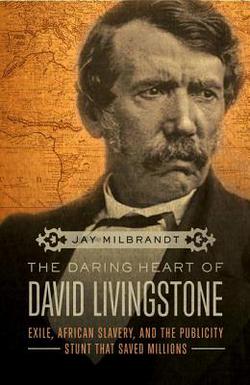
THE DARING HEART OF DAVID LIVINGSTONE (2014)

The Daring Heart of David Livingstone captures the account of the well-known 1595555927_bmissionary who sought with all his heart to bring the gospel to Africa in the 19th century.  Jay Milbrandt, professor at Bethel University is responsible for the meticulous research and for producing the final product.

Milbrandt guides readers through the adventures of the daring missionary who faced wild animals, hostile tribes, sickness among his family members, and eventually death itself.

But this is no ordinary missionary biography.  Indeed, Livingstone had a passion to bring the gospel to the nations.  But he also sought to end the slave trade in Africa.  Milbrandt describes all the events which eventually led to the abolition of the slave trade.  But interestingly enough, as the author notes, “Livingstone died perhaps believing he had failed in every respect.  Yet, in the few short years after his death, everything Livingstone had worked for had come to fruition.”

This book is vivid reminder that faithfulness and persistence matters.  It is a reminder that God is never obligated to reveal the fruit of one’s ministry in this lifetime.  Any fruit that is revealed is a result of the amazing grace of God.  It is this grace that Livingstone found his comfort and his strength.  It is this grace that fueled his resolve to make a difference in the lives of people – in order to spread a passion for the glory of God!

4 stars

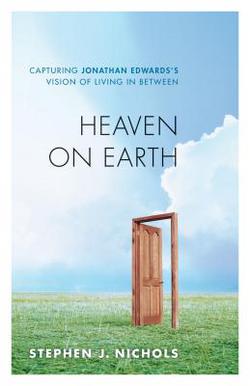
HEAVEN ON EARTH: Capturing Jonathan Edwards’s Vision of Living in Between – Stephen J. Nichols (2006)

Heaven on Earth by Stephen J. Nichols attempts to capture the essence of Jonathan nicholsEdwards’s vision for living in between heaven and earth.  The author confronts the typical negative response to Jonathan Edwards who is regularly caricatured as a mean-spirited Puritan who is preoccupied with the wrath of God.  Of course, nothing could be further from the truth.  Anyone familiar with Edwards admits that the Puritan divine preached unashamedly about the holy wrath of God.  But limiting the essence of his thought to eschatological fury is short-sighted and wrong.

Stephen Nichols skillfully alerts readers to the passion the resides in Jonathan Edwards to live a God-centered life on this side of heaven.  After introducing the broad strokes of Edwards’s biography, the author recasts some sermons which were penned by Edwards.  In these sermons, readers will note that Edwards emphasized the pursuit of pleasure, a theme which has been popularized by John Piper in his best-selling book, Desiring God.  Piper gets to the core of Edwardsian thought in his pithy statement, “God is most glorified in us when we are most satisfied in him.”

Nichols unpacks the emphasis on charity and works of love that emerges in Jonathan Edward’s writing: “It is the absolute  and indispensable duty of the people of God, to give bountifully and willingly for supplying the wants of the needy.”

And the happiness of God’s people is clearly revealed in the work of Jonathan Edwards: “The happiness of the saints in heaven consists partly in that they serve God … When the creature is in that state that is most agreeable to the proper perfection of its nature, then it is in its most happy state.”

Stephen Nichols successfully accomplishes his objective in this short introduction to the worldview of Jonathan Edwards.  My prayer is that newcomers to Edwards will read this excellent book and be drawn to read the primary sources.  My experience with Jonathan Edwards over the last twenty-five years has been nothing short of revolutionary.

HOW STARBUCKS SAVED MY LIFE – Michael Gates Gill (2007)

1592404049_bI have over one hundred and fifty books on my “to read list.”  Most of them are big books; important books.  Most of these books are theological in nature.  They address the big questions in life.  They stimulate my thinking.  They warm  my  heart.  These books lead me closer to the Savior.

So why would I pick up a book about a burned out corporate executive who took a  job on a “wing and a prayer” at Starbucks?  Why would I pick up a book about a guy who lost everything and traded a life of affluence for a blue-collar job and a green apron?

Perhaps the Starbucks label drew me in.  Or maybe the tagline by Hartford Cournant worked its magic with the word, “inspiring.”  Whatever it was, this little book edged out a bunch of good books and captured my attention for five or six hours.

How Starbucks Saved My Life is the riches to rags tale of a high-paid advertising executive who was not only fired but also threw away his marriage and ended up jobless, without health insurance and faced an expensive surgery to remove a tumor in his brain.

The book is readable from start to finish and is extremely difficult to put down.  The author utilizes his writing experience to lure readers in – a story that is both compelling, inspirational, and heartbreaking.

The most important character in Gill’s book is a twenty-eight year old African-American woman who hires the unemployed executive.  She emerges as the hero who mentors a man old enough to be her grandfather.  Crystal motivates, encourages, and even scolds Michael Gill.  In the words of Gill, she “saved my life.”

Another interesting feature of Gill’s book is the management philosophy of Starbucks.  He characterizes the coffee giant as a business who cares for their employees; a business who takes care of their employees.  Indeed, Starbucks is an organization that truly makes every guest feel special.

How Starbucks Saved My Life is a story about a man who comes full circle.  Gill admits his failures.  He owns up to his mistakes.  And in the final analysis, he celebrates his victories.  It is a story about the power of humans who connect with one another.

So why would I pick up a book like this?  Is it possible that every person wrestles with the same kinds of things that Michael Gates Gill struggles with?  The deepest answer to this question for belongingness is found in the gospel of Jesus Christ – a point that is never addressed in the book.  So the tension runs thick as the author beautifully expresses his need for belonging and connectedness.

4 stars


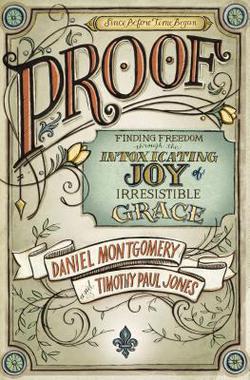
PROOF: FINDING FREEDOM THROUGH THE INTOXICATING JOY OF IRRESISTIBLE GRACE – Daniel Montgomery and Timothy Paul Jones (2014)

0310513898_bIntoxicating joy?  Irresistible grace?  The title is enough to draw the most lackluster reader in.  But once readers crack the massive door, they will be pleasantly surprised with what they find inside this elegantly decorated “castle.”

Proof: Finding Freedom Through the Intoxicating Joy of Irresistible Grace is a cleverly designed roadmap which underscores the importance of the doctrines of grace.  Yes, it’s true that Calvinists are charged all the time with hiding behind the moniker, “doctrines of grace” much like an Amway representative who hunkers behind the more palatable word, “business.”

Labels aside, the authors work hard to move past any preconceived notions about what Calvinism really is.  They resist the system as an end in itself for many good reasons.   But they fully embrace (and rightly so) the biblical framework of Reformed theology; the framework which was taught by Augustine, the Protestant Reformers, and the Puritans.  But these godly men merely built upon the Reformed theology which was originally taught by the prophets, apostles, and Jesus Christ himself.  In this historical context, one might argue that Jesus was the most famous Calvinist!

“Calvinism” the authors suggest, “for the sake of Calvinism is not worth fighting for – but grace is always worth fighting for.”  So with evangelical passion and strong biblical support, Montgomery and Jones build an alternative acronym which corresponds to the famous TULIP model to accurately defend the historic doctrines of grace.

The book is a beautiful summary of the key points which surfaced at the Synod of Dort in the 17th century.  The points are summarized below:

Planned Grace

  • “It was entirely free PLAN and very gracious will and intention of God the Father that the enlivening and saving effectiveness of his Son’s costly death should work itself out all the elect.”

Resurrecting Grace

  • “All people are conceived in sin and born children of wrath … Regeneration is a marvelous mysterious and inexpressible work, not less than or inferior power to that of creation or of the RESURRECTION of the dead.

Outrageous Grace

  • “Holy Scripture most especially highlights this eternal and UNDESERVED grace.”

Overcoming Grace

  • “Where before the rebellion and resistance of the flesh had dominated their hearts, now eager and sincere obedience from the Spirit begin to OVERCOME.”

Forever Grace

  • “God PRESERVES, CONTINUES, AND FINISHES this work” all to the praise of his glorious grace.

Each year, I am on the lookout for theological books which accurately reflect the doctrine of grace; books which are written for the laymen in mind and spur them to deeper reflection on God’s truth.  PROOF fits that bill perfectly.  The authors not only hit the doctrinal mark; they do so in a winsome way which is combined with a writing style that will appeal to a wide range of people.

Discover the truth of PROOF and become convinced of the grand theme of Reformed theology!


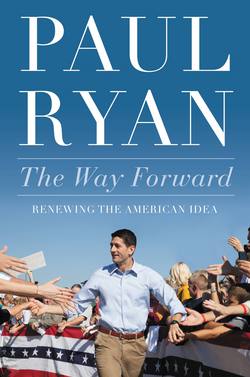
THE WAY FORWARD: RENEWING THE AMERICAN IDEA – Paul Ryan (2014)

ryanSeveral years ago, I set out to read about as many of the United States presidents as possible.  Reading about the great leaders in America’s history; leaders like George Washington, John Adams, Abraham Lincoln, and Ronald Reagan is an unforgettable experience that tends to leave a mark on each reader.

During this political season filled with failed policies and lackluster leadership, I set out to read about a few men who may one day occupy the Oval Office.  The first book is written by the Vice Presidential candidate, Paul Ryan.  His book, The Way Forward: Renewing the American Idea is a transparent look at the Wisconsin native and his vision for America.

Readers will be impressed with Ryan’s unassuming style.  He’s a small town boy with big dreams for America.  There’s no political pretense here; just well-thought out ideas that Ryan proposes in order to rescue our country from the clutches of the Obama administration.

Several reforms are proposed by Paul Ryan.  The first proposal he presents is entitlement and health-care reform.   The goal here, according to Ryan is to begin by repealing Obama care, the prized jewel of social progressives.   Ryan makes it clear that he intends to save social security, medicare, and medicaid.  But the current policies will, in the final analysis lead to economic disaster.  Ryan proposes commonsense solutions which promote competition among insurance companies and doctors which will ultimately drive down prices; not to mention put more money back into the pocketbook of Americans.

The second proposal includes an economic growth component.  Ryan addresses the growing national debt crisis which is over $17 trillion and rising.  He addresses the liberal proclivity to tax and spend.  Ryan adds, “The bottom line is that when you tax something , you get less of it.  So when we tax prosperity and success, we get less of each – and we need more of both so we can get the economy working for everyone again.”

Third, tax reform is on Ryan’s agenda.  He is in favor of a reduction of the corporate tax rate and argues in favor of a simpler tax code.  Ryan’s reforms would mean “that no business or family would pay more than 25 percent of their income to the federal government.”  And many Americans would pay considerable less under the Ryan plan.

Fourth, ending cronyism and corporate welfare.  Ryan notes, “Cronyism is integral to the progressive approach to governing.”  A brief look at the Obama policies only confirm this notion.  Ryan concludes, “Americans need to know that their government is on their side – encouraging robust competition that will best serve their interests and grow their economy – rather than on the side of big, established corporate players.  Capitalism and cronyism are not compatible, and it’s time Republicans made it much clear to voters that we are the party that stands for a competitive economy suitable for growth.”

Fifth, Ryan makes a good case for regulatory reform.  “Going forward,” he writes, “we should ease the regulatory  burden on the economy, and the best way to do that is to bring meaningful cost-benefit analysis back into the system, reconnect the law with the lawmakers, and restore the balance between the branches of the government.  True regulatory reform can restart economic growth – and produce the energy we need.”

Sixth, aggressive immigration reform should be a key plank in the GOP platform.  Ryan’s ideas are among the best I’ve read as a pathway for citizenship is offered and accountability required.

Seventh, sound monetary policy will guide our country into the future.

Finally, a twenty-first century national defense strategy and foreign policy.  Ryan refers to this final component of his plan as the “missed opportunity” of the Obama administration.  Moving forward will require a strong military and a foreign policy that builds bridges with our allies around the world.

There’s something strangely refreshing about Paul Ryan’s approach.  Readers will notice that this man is devoted to his family and country.  He just happens to be a politician.  Here is a man who has strong gifts  in the field of economics and understands how to apply a supply-side approach in the current climate.  Paul Ryan is a strong leader with strong values and a heart for the American ideal.  Whether he ever ends up in the Oval Office is anyone’s guess.  One thing is true: He knows the way forward.

PASTOR’S KID – Barbabas Piper (2014)

pkSome write to entertain; some to educate.  Others write to amuse or inspire.  Barnabas Piper writes to encourage.  He writes to encourage both pastors and their children.

Piper writes from experience.  His dad is Dr. John Piper, former Senior pastor of Bethlehem Baptist Church in Minneapolis, Minnesota.

Barnabas Piper is a Pastor’s Kid.  He, like every other PK understands the pressure and pain of living under the roof of a pastor.  Any doubters need only read a riveting sentence at the beginning the book: “The call of the father is not the call of the child, but the ministry of the father creates an anvil-like weight on the child … And it is this pressure, in part, that drives so many PK’s to break.”

Barnabas Piper performs a vital service for the Body of Christ in his book Pastor’s Kid: Finding Your Own Faith and Identity.  This is a candid inside look at the deep struggle which occurs in many PK’s.  Some PK’s rebel; others hide their emotions.  Some actually thrive.  But all will admit to living a life of sacrifice; a life that is something akin to living in a pressure cooker or a fishbowl.

Piper alerts readers to the kind of scrutiny that every PK faces: “It creates a tension in which it can be difficult to genuinely make ourselves known, and so PKs become both the best-known and the least-known people in the church.  In most cases there isn’t a single person or particular group of people doing the watching.  It’s a collective, disorganized, largely unintentional effort on the part of the church as a whole.  At best it is bothersome; at worst it is suffocating and warping.”

Piper writes from two angles in this excellent book.  First, he has plenty to say to PKs.  A lot of the advice comes through the backdoor as the author reminds every PK of this important reality: They are not alone.  It’s as if he says, “If John Piper’s son struggled in many ways, it should not come as a surprise if you struggle too.”  So Barnabas Piper not only writes from experience; he writes with great empathy and compassion.  There is a wealth of wisdom here that every PK should benefit from.

But the younger Piper has much to say to pastors as well.  He pulls no punches and shares his wisdom with candor and humility.  Most readers will no doubt wonder, “I wonder what his dad thinks about that sentence?”  Piper’s advice to pastors will cut deep but will in the final analysis prove helpful.

Like Piper, I write from experience.  I write as one who has served as a pastor for nearly twenty-five years.   But I’m also a PK.  So I’ve seen both sides of the fence.   Both sides have challenges but both sides are filled with opportunities for growth and sanctification.  Pastor’s Kid loaded with practical advice for pastors and their children!

One of my life goals is to teach in Bible College or Seminary; to train and equip the next generation of pastors and theologians.  If God opens that door in the future, Pastor’s Kid by Barnabas Piper will be required reading for every student.  It’s that good.  I am confident that Piper’s work will travel far and encourage many people.  May we heed his words, hear his heart, and respond with God-centered resolve.

4.5 stars


ROW FOR FREEDOM – Julia Immonen (2014)

ROWYou will never find me bungy-jumping, surfing, skydiving, or dangling from the face of the Half Dome in California.  However, I do enjoy reading about the adventures of other people who put their necks on the line for a thrill.  Row For Freedom by Julia Immonen is a classic example of adventure, courage, and sacrifice.  But the “thrill” of the row is secondary.  The author has a greater purpose in mind.  This purpose is in fact, the grand theme of the book.

Immonen recounts the true tale of her journey across the Atlantic with four other brave women.  What would motivate these women to risk their lives by rowing across the Atlantic?  First, they were shooting for a world record.  But what really grabbed my attention was the second goal, namely, to raise money to fight the horrible sin of human trafficking.

The author provides some biographical detail which concerns her life as  a child in Finland and her subsequent move to the UK.  Her dream to row the Atlantic is met with several challenges along the way but she and her sisters succeed.

The story is gripping, fast-moving, and begs readers to finish in one sitting.  The book is raw, emotion-filled, and challenging.

While the story is moving in many ways, I must confess that the most disappointing part was the gospel which is barely recognizable.  While the author is quick to give God credit, the gospel is never articulated in a clear terms.

Row For Freedom is a gripping book.  The real beauty of Row For Freedom, however, is Immonen’s obvious hatred for human trafficking.  It is her antipathy for this vile practice that motivated her to keep rowing, an antipathy that needs to spread to people of influence and conviction; people willing to make a difference one person at a time.  My hope is that the book will receive a wide reading and alert millions of people to the evil of human trafficking – a wicked industry that enslaves 30 million slaves around the world.  To that end, the Row For Freedom will not be in vain.  Slaves will be liberated and the world will be a better place.

I received this book free from the publisher through the BookLookbloggers®.com book review bloggers program. I was not required to write a positive review. 

REPENTANCE – J.C. Ryle

J.C. Ryle was a man who would have been hated in this generation.  This cannot be jc-ryle_5
stated too  strongly.  For instance, consider a man such as Mark Driscoll, a man who makes mistakes like anyone.  But Driscoll is a bold preacher.  He calls sin for what it is and urges sinners to repent.  That bold message is met with stiff resistance by cold-hearted pagans and embittered people who name the name of Christ.  So like Driscoll, Ryle was man who was unafraid of speaking in plain terms, biblical terms.

J.C. Ryle (1816-1900) was best known for serving as the first Anglican bishop of Liverpool.  He was a prolific writer and a faithful pastor.  His book Repentance is representative of his work.  It is clear, biblical, and aims straight for the heart.  The basis of Ryle’s work is found in Luke 13:3 – “Except you repent, you shall all likewise perish.”  Ryle notes that Christ’s words may seem “stern and severe.  But they are words of love, and may be the means of delivering precious souls from hell.”

The Nature of Repentance

The author reminds his readers that repentance was the first doctrine that came out of our Lord’s mouth.  He defines repentance as “a thorough change of man’s natural heart, upon the subject of sin.”  With the theological groundwork in place, Ryle continues by noting several marks of the penitent man.

  • True repentance begins with knowledge of sin.
  • True repentance goes on to work sorrow for sin.
  • True repentance produces confession of sin.
  • True repentance shows itself in a thorough breaking off from sin.
  • True repentance shows itself by producing in the heart a settled habit of deep hatred of all sin.

Ryle remarks, “Wherever faith is, there is repentance; wherever repentance is, there is always faith.”

The Necessity of Repentance

Ryle makes it painfully clear that every creature is required to repent.  Indeed, there are no exceptions: “The queen upon her throne and the pauper in the workhouse, the rich man in his drawing-room, the servant maid in the kitchen, the professor of sciences at the University, the poor ignorant boy who follows the plough – all by nature need repentance.”  The author does the reader a great service by setting forth this critical requirement before God.

Three concrete reasons are offered for each creature to repent:

  1. Without repentance, there is no forgiveness of sins.
  2. Without repentance there is no happiness in the life that now is.
  3. Without repentance there can be no fitness in the world that is yet to come.

The Encouragements to Repentance

Ryle recognizes that sinners are generally slow in coming to Christ and repenting of their sins.  He offers five encouragements for sinners who stand at the crossroads before a holy God:

  1. Hear for one thing, what a gracious Savior the Lord Jesus Christ is.
  2. What glorious promises the Word of God contains.
  3. What gracious declarations the Word of God contains.
  4. What marvelous parables our Lord Jesus spoke upon this subject.
  5. What wonderful examples there are in the Word of God, of God’s mercy and kindness to penitent people.

My hope is that this short review will entice many to devour Repentance by J.C. Ryle.  This short book is devotional, practical, and is food for the soul.  May Christ’s words in Luke 13:3 take root in your heart today – “Except you repent, you shall all likewise perish.”

HEAVEN’S DRAGNET – Jonathan Edwards (1751)

The text is Matthew 13:47-50.  The missionary to the Stockbridge Indians sets hisjonathan-edwards
doctrine
up in advance:

The fisherman that cast the net are ministers of the gospel whom Christ appoints to gather men into his church.

Edwards draws an immediate contrast between the righteous and the unrighteous: “So God will save his saints and make much of them as precious to him, and as those that he dearly loves … But the bad fish men cast away, as those that were good for nothing.”

The judgment of the unrighteous is presented in vivid terms which are familiar to readers of Jonathan Edwards: “The fire shall be exceeding great and dreadful, for it will [be] the fire that God will enkindle by his great power, and in the fierceness of his great wrath for the wickedness of men, and therefore doubtless vastly more terrible than any fire ever seen in this world.”

Edwards describes what Jesus refers to as the “wailing and gnashing of teeth.”  He adds, “They will wail because their misery will be very dreadful and what they cannot bear; and also because they never shall have any hope of being delivered,  will know that there will be no end to their misery.”

Application

Edwards continues to utilize the metaphor drawn from the world of fishing, a metaphor that his hearers could certainly relate to: “The net has been let down and many of you have been gathered in it and brought in among the people of Christ, into the kingdom of Christ.”  He challenges his audience, “You can deceive men with a good outside when your hearts are rotten, but you can’t deceive God.”

He draws the sermon to a close by challenging the hearts of his hearers: “Therefore, take heed to yourselves that you ben’t at last found some of the bad fish that be cast away.  See to it that your hearts are right with God … Don’t rest in outward show but get a clean heart: a holy heart that hates all sin and loves Christ, and loves all the people of Christ, and loves all the ways of God … Unless you have a new heart, you never will be good.  Though you may be good in some things, yet if you han’t right hearts you will live wickedly in other things … That is the reason that some men reform their lives for a while only, and then never again.  Their hearts were never changed.”


LEADERSHIP LESSONS – Ralph Hawkins and Richard Leslie Parrott

1401677282_bLeadership Lessons, by Ralph Hawkins and Richard Leslie Parrott is a case study about the failure of King Saul.  The authors raise need at the beginning of their book by providing a biblical rationale for studying a failed leader.  Colin Powell reveals the test of leadership failure: “The day soldiers stop bringing you their problems is the day you stop being their leader.  They have either lost confidence that  you can help them or concluded that you do not care.”  Leadership Lessons helps prevent Secretary Powell against.

The second part of the book introduces readers to ten failures on Saul’s part:

1. Saul failed to handle authority humbly

2. Saul failed to break out os his tendency to isolate himself

3. Saul failed to think before he spoke

4. Saul failed to act when the time was right

5. Saul failed to lead the people, but let them lead him instead

6. Saul failed to promote or make necessary changes

7. Saul failed to love the people

8. Saul failed to be true to his own ethics

9. Saul failed to admit failure or concede  to David

10. Saul failed to consult God

These ten leadership failures capture the essence of Saul’s life and his failure as the King of Israel.  The authors are to be commended for excavating these failures and warning readers from committing the same sins in their sphere of influence.

The third section discusses ways to avoid the pitfalls of King Saul and his leadership failures.  Boiled down, the authors argue that Saul’s failure can motivate and aspire leaders to excel in their respective arenas.  In other words, leaders can learn from Saul’s mistakes.

Leadership Lessons is filled with practical tips for serving people with humility.  One criticism that must be noted is the propensity to turn Saul’s sin into a personality disorder.  Whenever one promotes the notion of “personality disorder” the next step is some form of “therapy” to remedy that personality disorder.  But in Saul’s case, his leadership failure was the result of sin.  It was sin that led him down a path that ultimately destroyed his rule and reign.  It was sin that led to his untimely death.  And the cure for sin is not therapy.  The cure for is the gospel of Jesus Christ.

My hope is that leaders will benefit from this book.  Much can be learned from the sinful example of King Saul.  So much more can be gained by grounding our leadership is the saving message of the gospel of Jesus Christ!

I received this book free from the publisher through the BookSneeze®.com  book review bloggers program. I was not required to write a positive review.